
What a classroom drone build should actually teach
The airframe is the least interesting part. A build program earns its place in a curriculum through the documentation, the safety structure and the failure analysis around it.
July 14, 2026 · 7 min read
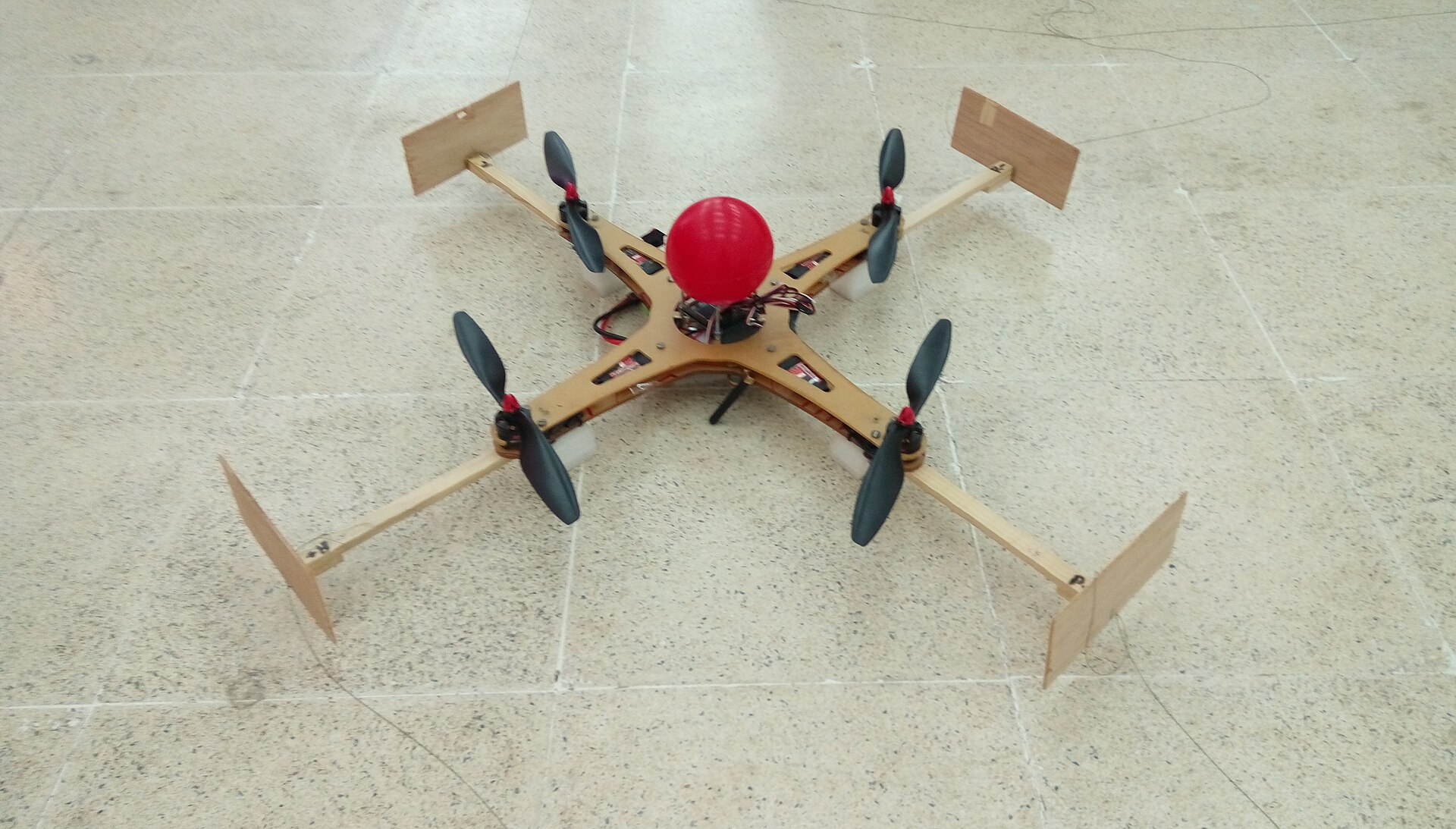
A drone build makes an excellent classroom project for an obvious reason: at the end of it, something flies. But the flight is the reward, not the lesson. The lesson is everything a student has to get right before the aircraft is allowed to leave the bench.
Start pre-soldered
Soldering is a genuine skill and a genuine hazard, and combining a first solder joint with a first flight controller is how kits die. Our classes begin with pre-soldered kits so that the first build is about assembly, orientation, configuration and testing. Soldering comes later, as its own module, on parts that are not holding an aircraft together.
Every build is a records exercise
This is the part most programs skip, and it is the part that transfers to actual aviation work. A student who assembles a quadcopter and writes nothing down has built a toy. A student who registers each component, notes the configuration, records the bench test results and signs a go/no-go has performed a maintenance action.
- Component inventory: what went in, which slot, which orientation, which serial where one exists.
- Configuration record: firmware version, motor direction, receiver protocol, failsafe setting.
- Bench test record: continuity, motor direction under power with props off, control response, link check.
- A written go/no-go decision with the student's name on it before the first flight.
Failure is the curriculum
Something will not work on the first attempt — a reversed motor, a mis-bound receiver, a connector seated at an angle. That moment is the highest-value part of the whole program, provided the class treats it as a diagnosis exercise rather than an embarrassment. Isolate, hypothesize, test one variable, record the result. That loop is engineering.
The safety structure comes first
Before any student flies, the class covers registration, the 250-gram threshold, altitude and line-of-sight limits, and where flight is and is not permitted. For younger students the operative framework is the recreational exception at 49 U.S.C. 44809 and the safety guidelines of an FAA-recognized community-based organization such as the Academy of Model Aeronautics, a nonprofit that has published model-aircraft safety programming for decades. TRUST, the FAA's free recreational safety test, is a natural class assignment.
Show students where this leads
The gap between a classroom quadcopter and a working aircraft is smaller than students assume. NASA's field research — including projects studying uncrewed aircraft supporting emergency responders, and the traffic-management concepts underneath the FAA's current beyond-visual-line-of-sight proposal — is publicly documented and freely readable. Showing a student that the flight controller in their hands solves the same problem class NASA is testing in a field is worth more than another lecture slide.
Primary sources
Everything above is drawn from these documents. Read them directly.
- 01Recreational Flyers & Modeler Community-Based OrganizationsFederal Aviation Administration
- 02The Recreational UAS Safety Test (TRUST)Federal Aviation Administration
- 03AMA National Model Aircraft Safety CodeAcademy of Model Aeronautics
- 04STEReO — Scalable Traffic Management for Emergency Response OperationsNASA