
An early-stage UAS venture
Software first. The drone is how we teach it.
The RAPD Group's working product is the UAS Mission Maintenance Tracker, already in development. Alongside it we hope to build our first mini drone as a STEM project — and to teach drone building, assembly, and calibration classes, plus guidance on earning an FAA Part 107 license.
Track readiness. Build capability. Advance flight.
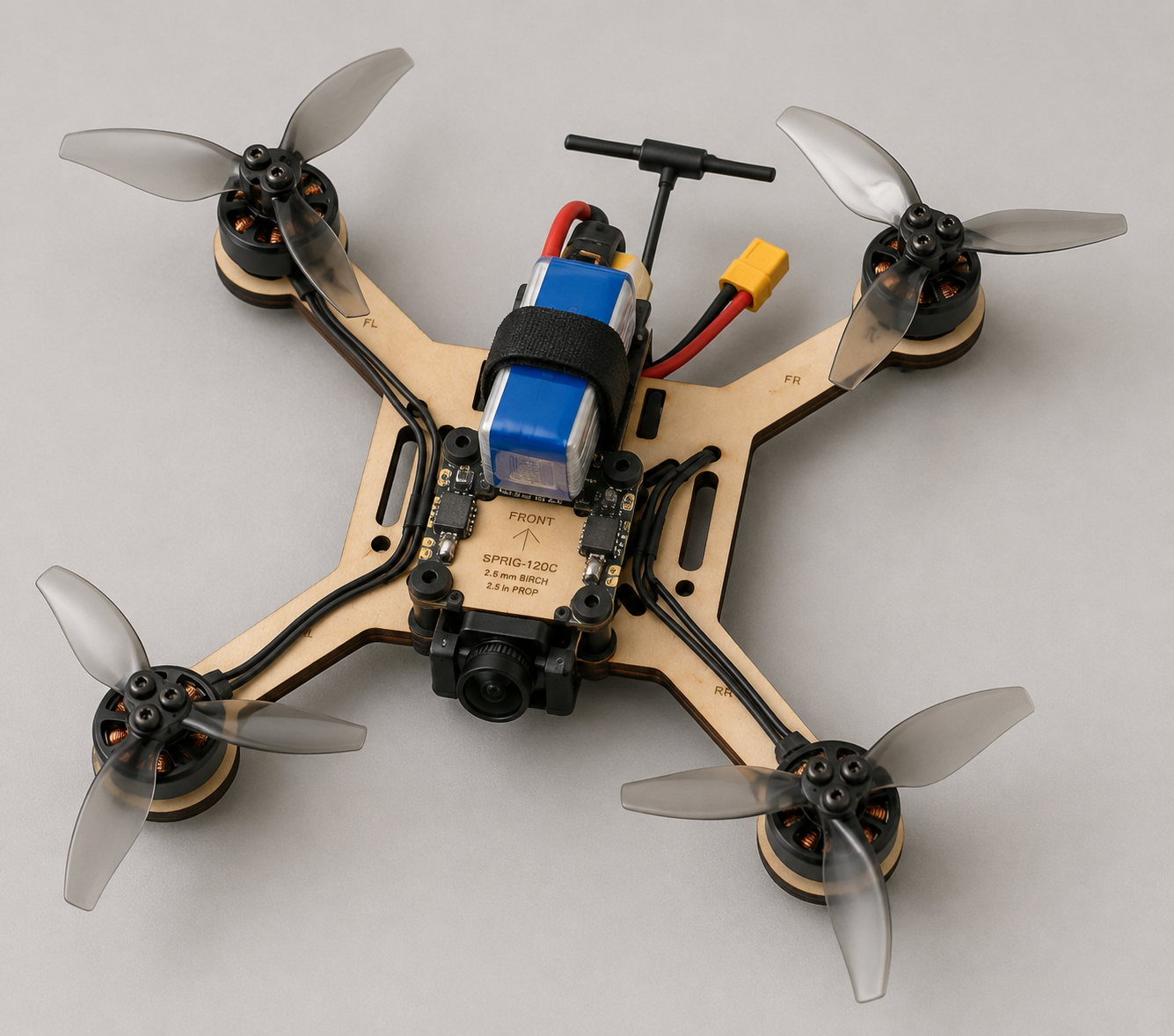
AI concept rendering — the intended SPRIG-120C mini build, not a completed aircraft
Proof that exists today
We started with the system behind the aircraft.
The UAS Mission Maintenance Tracker models the relationship between maintenance conditions, mission events, parts status, operator qualification, and overall readiness around a single unmanned aircraft.
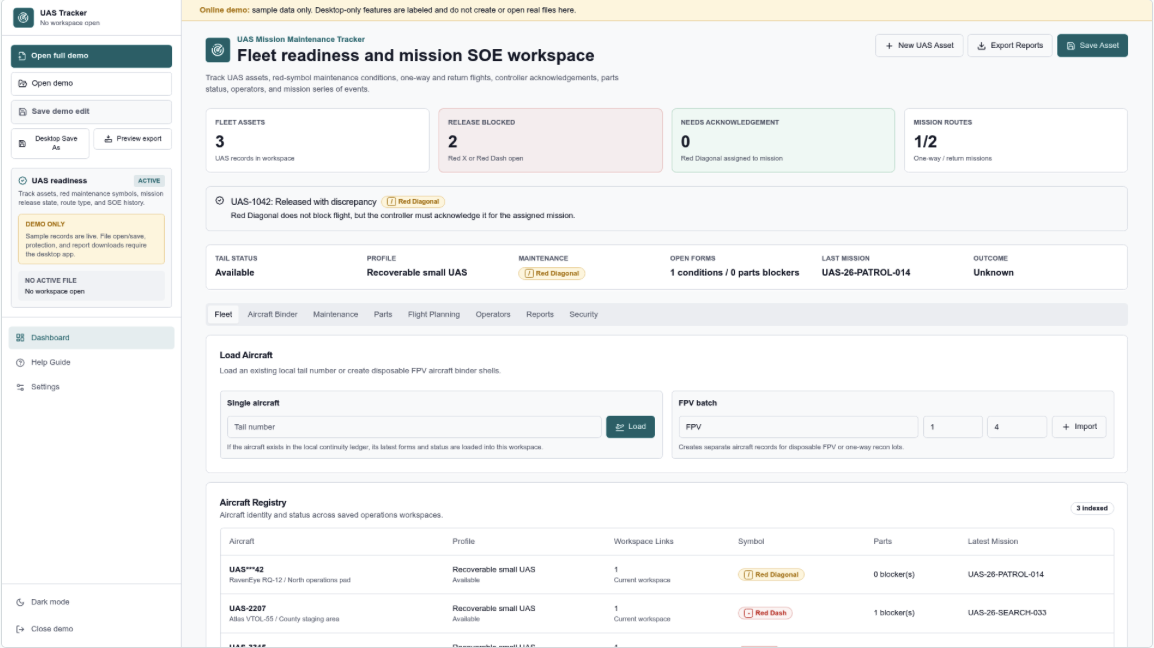
Aircraft and component status
Every airframe and major component tracked as a connected record, not a loose note.
Maintenance conditions and actions
Conditions raise actions; actions close with an outcome and a change to readiness.
Mission history and outcomes
Flights, payloads, and results tie back to the parts that flew them.
Operator qualification and readiness
Personnel currency modeled alongside aircraft condition to answer one question: can we fly?
Note: the application is a concept demonstration. It is not a certified aviation maintenance system and is not approved for airworthiness recordkeeping.
Operational profiles
Not every aircraft is maintained the same way.
Our model considers aircraft profiles that conventional maintenance products may not represent well.
Photography and research aircraft
Reusable platforms where sensor payloads and airframe hours both drive maintenance.
FPV airframes
High-iteration builds where components are swapped often and history is easily lost.
Aircraft managed as lots
Fleets tracked in groups rather than as individually numbered assets.
One-way missions
Profiles where expenditure of the aircraft is an expected outcome, not a failure.
Free drone course
Learn the fundamentals, then test what you know.
Ten self-paced lessons — drone types, FPV vs. camera drones, controllers vs. ground stations, buying, components, batteries, terminology, rules and safety, FAA Part 107, flight and maintenance — plus a 60-question test drawn from a bank of 300+ and a verifiable RAPD certificate of completion.
Sign in to the student portal to save your test history and re-download your certificate any time.
RAPD is not accredited or a certifying body and the material was developed with the assistance of AI. Passing issues a RAPD certificate of completion, not an FAA credential.
Prototype roadmap
A documented path from kit to experimental frame.
Every milestone carries an honest status. Nothing is marked validated until test data supports it.
- 1
Cut a test frame on portable machinery
In TestingRobert Anthony Art cut a set of SPRIG-120C plates to answer two questions: how long does a frame take to cut, and is portable laser-cutting practical? The bottom plate is basswood.
- 2
Have an expert verify the sourced components
PlannedBefore anything is built, bring in an experienced builder to review the motors, ESCs, flight controller, battery, and props we have sourced against the frame.
- 3
Recut the frame from the review
PlannedApply the expert's corrections to the plate geometry and material choice, then cut a second set.
- 4
Build the first mini drone
PlannedAssemble the SPRIG-120C from the verified frame and components, documenting each step as it happens.
- 5
Record the build in the tracker
PlannedRegister every major component, serial, and configuration in the maintenance tracker as the aircraft is assembled.
- 6
Bench test before flight
PlannedWiring checks, motor direction, thrust and vibration measurement, and written go/no-go criteria before anything leaves the bench.
- 7
Turn the build into a class
PlannedConvert the documented build into a repeatable STEM curriculum for drone building, assembly, and calibration classes.
Funding snapshot
Help us move from software to flight.
Funding is applied to concrete, documented capability. We do not publish valuations, projected returns, or traction we cannot evidence.
Aircraft components and test equipment
Airframes, motors, ESCs, batteries, and the instrumentation needed to measure results.
Fabrication equipment and materials
3D printing and laser-cutting capacity plus the material stock for iteration.
Video documentation
Cameras, lighting, and editing time so every build and test is publicly verifiable.
Software development and hosting
Continued work on the UAS Mission Maintenance Tracker and its infrastructure.
Controlled testing and safety preparation
Test stands, protective equipment, site access, and written safety procedures.
STEM pilot development
Curriculum drafting and a small pilot with an interested school or program.
Our talent mission
Real work is the best training program.
We build this work to find, attract, and train technical talent through real work. RAPD turns prototype development into documented learning experiences, apprenticeships, and eventually structured STEM programs.
See the STEM directionFounder video
Who we are and what the first aircraft will prove
A two-to-three minute introduction from the founder: why RAPD exists, what already works, what the first documented build will demonstrate, and the specific help we are asking for. Captions and a written transcript will be published with the video.
Build the first aircraft with us.
Funding, equipment, expertise, pilot users, and introductions all move this program forward. Tell us which one fits.