
Software first — hardware as a STEM project
The software is already in the works. The drone is how we teach it.
Our working product is the UAS Mission Maintenance Tracker. The aircraft program runs alongside it as a hands-on STEM project: cut a frame, verify the parts with an expert, recut, and build one honest mini drone in public.
Where this started
A frame cut to answer a question, not to fly.
Robert Anthony Art cut out this frame as a feasibility test: how long does it take to cut a drone frame on portable machinery, and is doing it that way practical at all? The bottom plate is basswood. The cut answered the timing question, so the next step is hiring an expert to verify the components we have sourced, recutting the frame from that review, and moving forward with the build of the first mini drone.
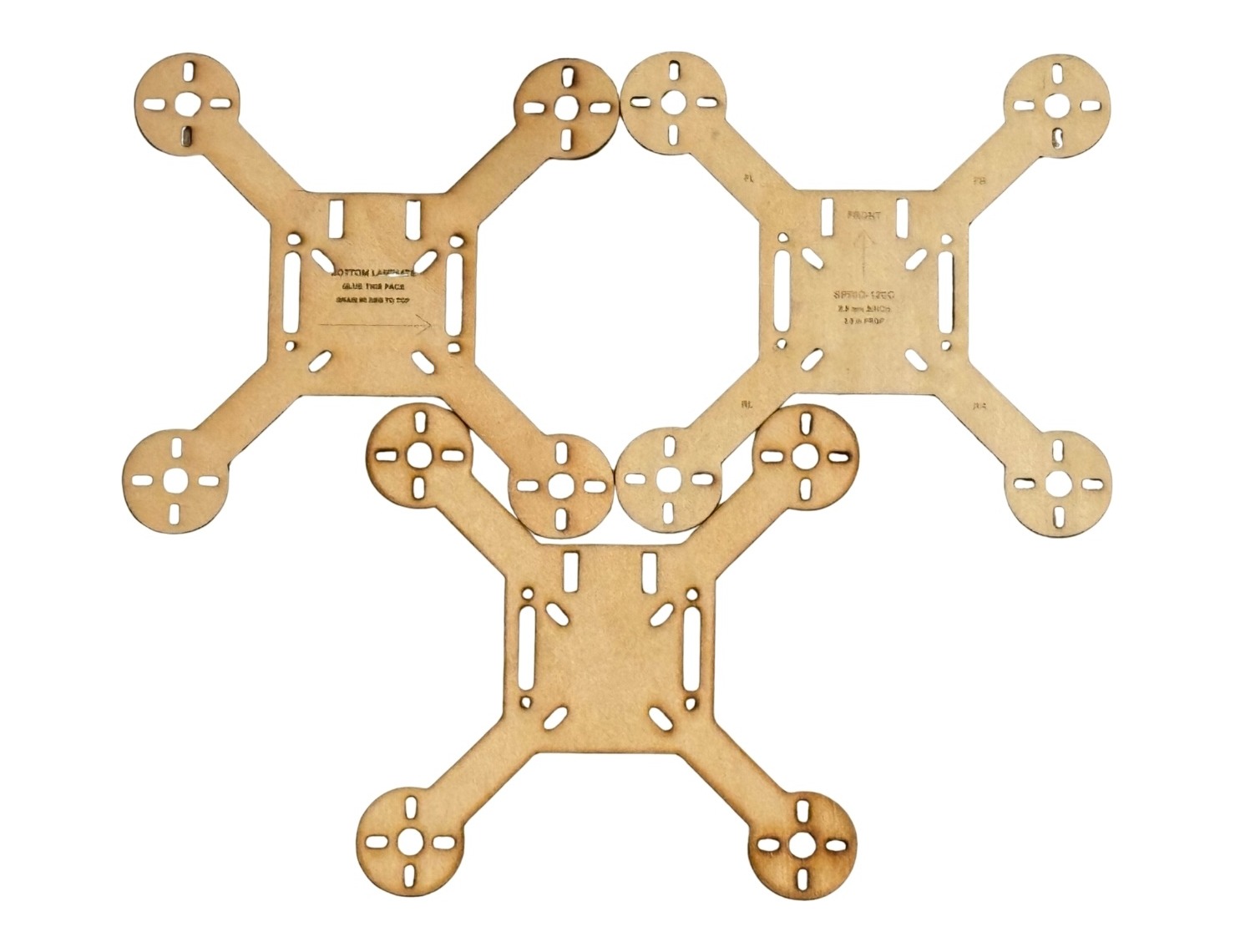
Feasibility cut by Robert Anthony Art — basswood bottom plate. Not an assembled or tested aircraft.
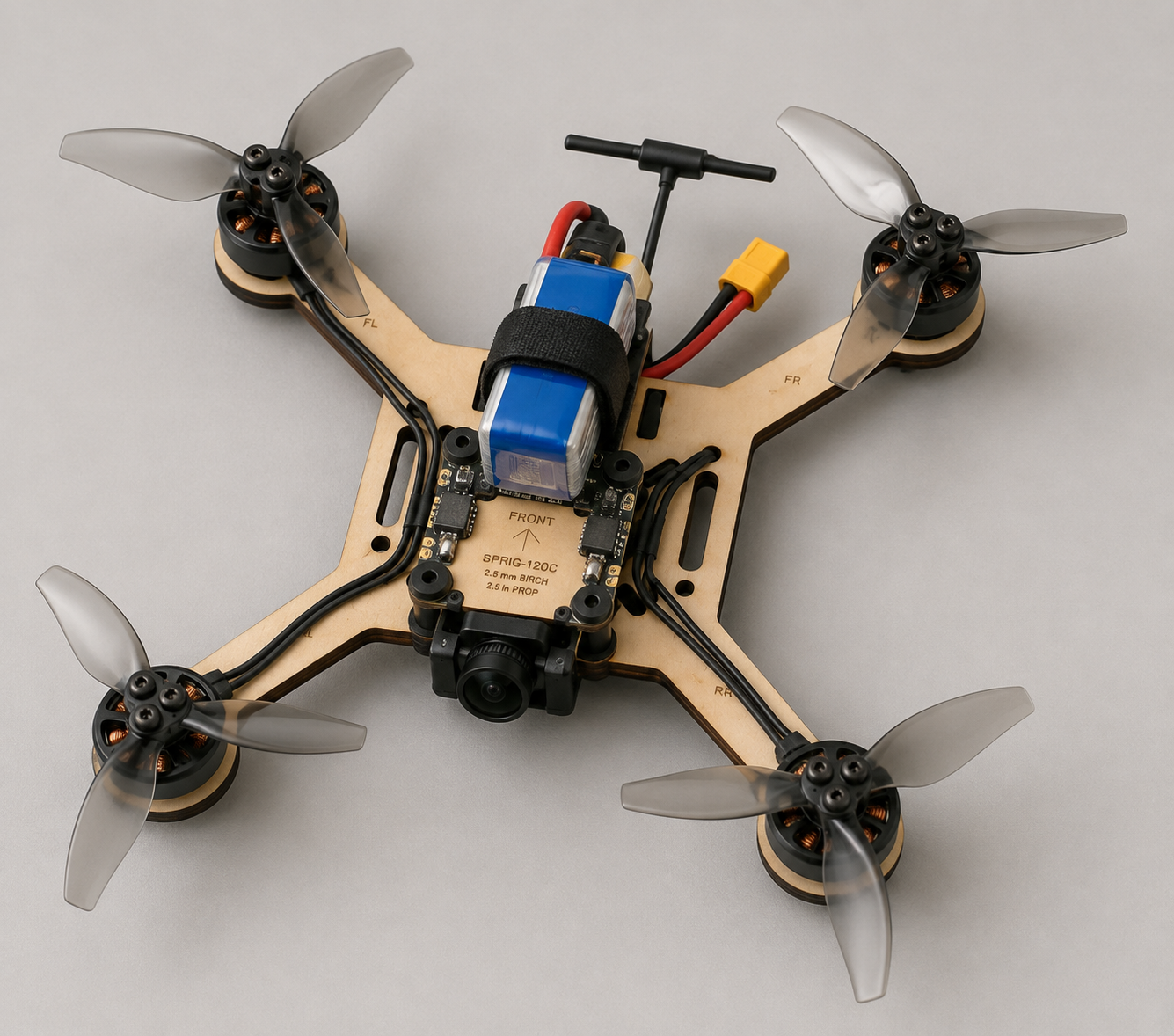
SPRIG-120C build reference — 2.5 mm birch, 2.5 in props. Not yet flight tested.
- 1
Cut a test frame on portable machinery
In TestingRobert Anthony Art cut a set of SPRIG-120C plates to answer two questions: how long does a frame take to cut, and is portable laser-cutting practical? The bottom plate is basswood.
- 2
Have an expert verify the sourced components
PlannedBefore anything is built, bring in an experienced builder to review the motors, ESCs, flight controller, battery, and props we have sourced against the frame.
- 3
Recut the frame from the review
PlannedApply the expert's corrections to the plate geometry and material choice, then cut a second set.
- 4
Build the first mini drone
PlannedAssemble the SPRIG-120C from the verified frame and components, documenting each step as it happens.
- 5
Record the build in the tracker
PlannedRegister every major component, serial, and configuration in the maintenance tracker as the aircraft is assembled.
- 6
Bench test before flight
PlannedWiring checks, motor direction, thrust and vibration measurement, and written go/no-go criteria before anything leaves the bench.
- 7
Turn the build into a class
PlannedConvert the documented build into a repeatable STEM curriculum for drone building, assembly, and calibration classes.
What we need
Specific gaps a partner can close.
Equipment, materials, shop time, and technical review move milestones faster than anything else at this stage.
- Expert review of the components we have already sourced
- Motors, ESCs, flight controller, battery, and props for the first mini build
- Portable laser-cutting time and basswood, birch, and plywood stock
- Bench test stands and thrust or vibration instrumentation
- Safe, permitted space for first hover tests
- Instructors and classroom space for drone building and Part 107 classes